Feeling overwhelmed by the endless sea of AI marketing tools? You're not alone. Every week, a new 'game-changer' pops up, promising to triple your leads while you sleep. But which ones actually deliver? We've cut through the hype to bring you the definitive list of 12 platforms that are genuinely transforming how marketers work. This isn't just another generic list; it's your battle-tested guide to building a smarter, more efficient marketing engine.
We're getting straight to the point: what each AI tool for marketing does, who it's for, and its real-world pros and cons. You'll get actionable insights, screenshots, and direct links to see everything in action. We'll cover everything from crafting compelling copy with Jasper and Copy.ai to automating your entire customer journey with HubSpot and Salesforce. We'll even explore how to create stunning visuals with platforms like PixelPanda and Canva Magic Studio.
For marketers looking to integrate video, learning how to make AI videos that convert can be a game-changer for your content strategy. This guide is designed to help you find the perfect match for your specific needs, whether you're a developer integrating APIs, an e-commerce seller managing a massive product catalog, or a creative agency pumping out high-volume content. Let's dive in and find the tools that will stop the guesswork and start driving real growth.
1. PixelPanda
PixelPanda isn't just another AI image editor; it's a full-stack visual production platform designed to automate the heavy lifting of modern marketing. It stands out by combining studio-grade image editing with advanced video and avatar generation, making it a uniquely powerful ai tool for marketing teams who need to scale content creation without sacrificing quality.
What truly sets it apart is its dual focus on developer-friendly integration and practical marketing applications. The platform's robust REST API and SDKs allow for seamless integration into existing workflows, while its suite of tools directly addresses common marketing bottlenecks. Think instant background removal for thousands of e-commerce product shots, AI-powered upscaling to make user-generated content print-ready, or generating entire sets of on-brand lifestyle images from a simple text prompt.
For teams venturing into next-gen content, PixelPanda's avatar features are a game-changer. You can train custom AI models, create UGC-style talking-head videos with natural lip-syncing in over 35 languages, and even showcase products with AI-driven outfit try-ons. This combination of high-quality, automated visual production makes PixelPanda a formidable ally for any marketing team aiming for consistency, speed, and scale.
Core Features & Use Cases
| Feature | Best For | Marketing Use Case |
|---|---|---|
| Background Removal & Cleanup | E-commerce, Product Catalogs | Automatically create clean, transparent PNGs for product listings or promotional graphics, removing watermarks from stock assets. |
| Avatar & UGC Video Generation | Social Media, Global Campaigns | Generate diverse AI models or create realistic talking-head videos for ads and tutorials, localized in 35+ languages. |
| 4x Upscaling & Enhancement | Print, Web Assets | Rescue low-resolution images for high-quality ad campaigns or improve the clarity of user-generated content for social proof. |
| Text-to-Image Generation | Content Creation, A/B Testing | Quickly generate unique lifestyle shots, creative concepts, or ad variations without needing a photoshoot. |
Pricing & Access
PixelPanda operates on a straightforward, credit-based system (1 credit/image, 20 credits/video). Plans start at $39/month (billed annually) for 7,000 credits, with the key advantage that unused credits roll over. All paid plans include commercial usage rights. You can explore the platform's capabilities with a generous free trial without needing a credit card. For a detailed breakdown of the tiers, you can learn more about PixelPanda's pricing.
- Pros: Comprehensive studio-grade toolset; developer-friendly API; unique avatar and video generation features; scalable, credit-based pricing with rollover.
- Cons: Best pricing requires annual billing; AI-generated content may still need a quick human review for brand alignment.
Website: https://pixelpanda.ai
2. Jasper
Jasper is less of a simple writing assistant and more of a full-blown AI marketing co-pilot, designed to keep your entire team's content creation on the straight and narrow. Think of it as the responsible adult in the room of chaotic content brainstorming. Its standout feature is the ability to create a "Brand Voice" by uploading documents, scanning your site, or providing style guides, ensuring everything from a tweet to a blog post sounds consistently you. This makes it an exceptional ai tool for marketing teams worried about brand dilution.
This platform excels at orchestrating entire campaigns, not just single pieces of copy. You can use its Canvas feature to map out and generate a series of connected assets like ads, emails, and social posts for a cohesive launch.
Key Info & Use Cases
- Best For: Marketing teams and enterprises needing brand-safe, scalable content.
- Top Use Case: Building a multi-asset campaign where every piece of content, from ad copy to a landing page, maintains a consistent brand voice and messaging.
- Pricing: Starts at $39/month (billed annually) for the Creator plan. The real magic, like the no-code AI App Builder and advanced brand controls, is locked in the custom-priced Business tier. A 7-day free trial is available.
Pros & Cons:
| Pros | Cons |
|---|---|
| Enterprise-grade governance & brand safety controls | Best features are gated to the custom-priced Business plan |
| Designed for full campaign workflows, not just isolated copy | Seat-based pricing can become expensive for larger teams |
| 7-day free trial on self-serve plans | Can have a steeper learning curve than simpler writing tools |
Website: https://www.jasper.ai
3. Copy.ai
Copy.ai positions itself as a central nervous system for your marketing content, combining AI-powered writing with a powerful workflow automation engine. It moves beyond simple text generation by letting you build and deploy "Content Agents" trained on your specific brand voice and marketing objectives. This makes it a formidable ai tool for marketing that not only writes but also executes structured content processes, from SEO blog briefs to multi-channel social media posts.
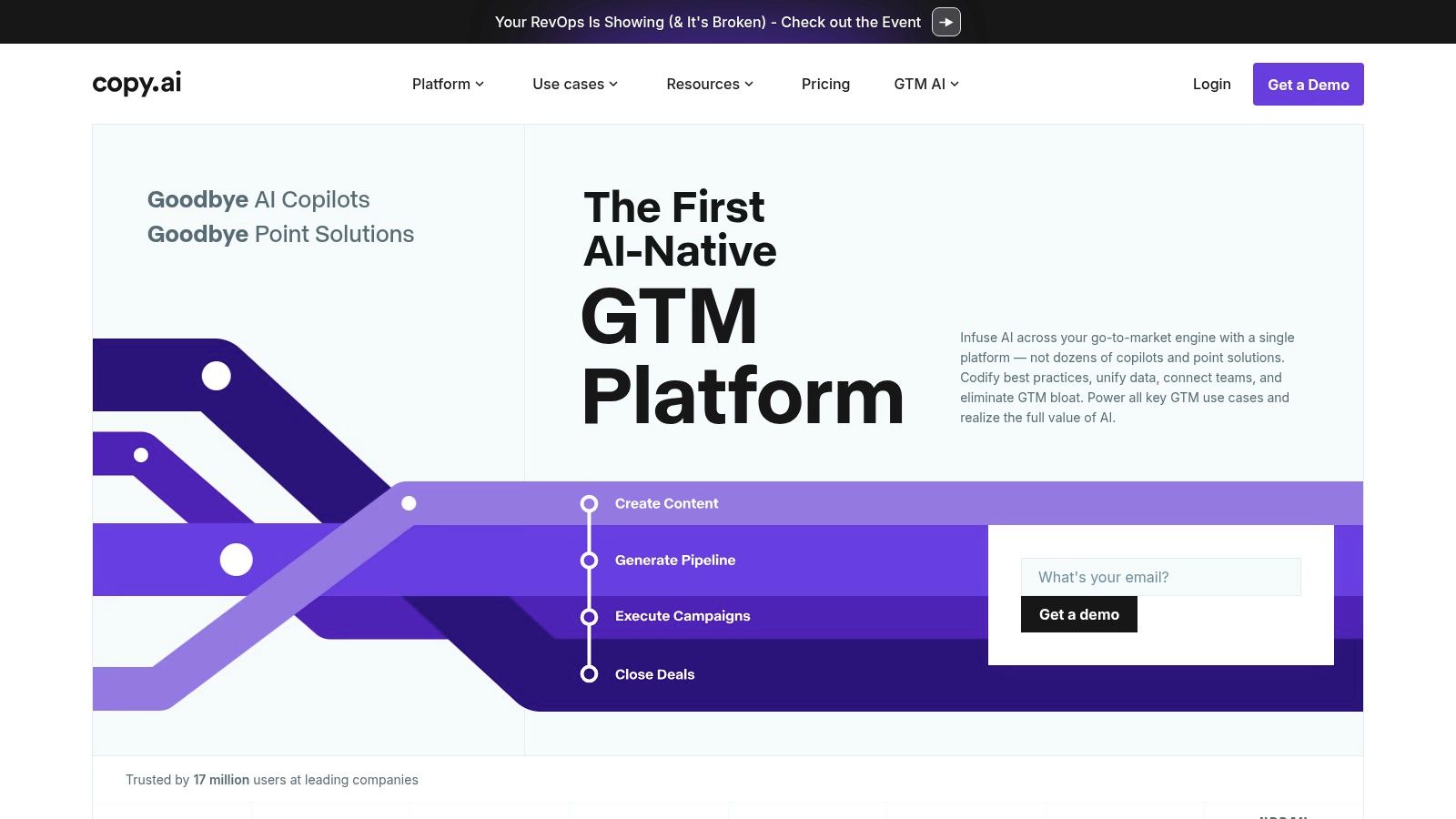
Its key differentiator is the Workflow builder, which allows marketing teams to chain together prompts and actions to automate repetitive content tasks at scale. By offering access to multiple top-tier models like those from OpenAI and Anthropic, it ensures you're not locked into a single AI's quirks, letting you choose the best engine for the job.
Key Info & Use Cases
- Best For: Small to mid-sized marketing teams looking to automate content workflows and operationalize their brand voice.
- Top Use Case: Building a custom "SEO Blog Post Agent" that takes a keyword, researches SERPs, outlines a structure, writes the draft, and formats it for publishing, all in one automated run.
- Pricing: A free plan with a 2,000-word limit is available. Pro plan starts at $36/month (billed annually) with 5 seats included. Enterprise plans offer advanced features and security.
Pros & Cons:
| Pros | Cons |
|---|---|
| Competitive entry pricing with 5 seats included on the Pro plan | Workflow credit system can be confusing to manage and predict |
| Agent-driven workflows allow for high-level content automation | Some users have reported subscription and billing complaints |
| Access to multiple underlying LLMs (OpenAI, Anthropic, Gemini) | Less focused on enterprise governance than competitors like Jasper |
Website: https://www.copy.ai
4. HubSpot Marketing Hub (with HubSpot AI)
If Jasper is a specialized co-pilot, HubSpot is the entire AI-powered aircraft carrier for your marketing operations. It's a full-stack platform where your CRM, email, social, and ads live under one roof, with AI woven throughout to make each component smarter. The real power here isn't just one AI feature but how they all work together using a unified customer data source. This makes it an indispensable ai tool for marketing for teams that are tired of duct-taping ten different apps together.
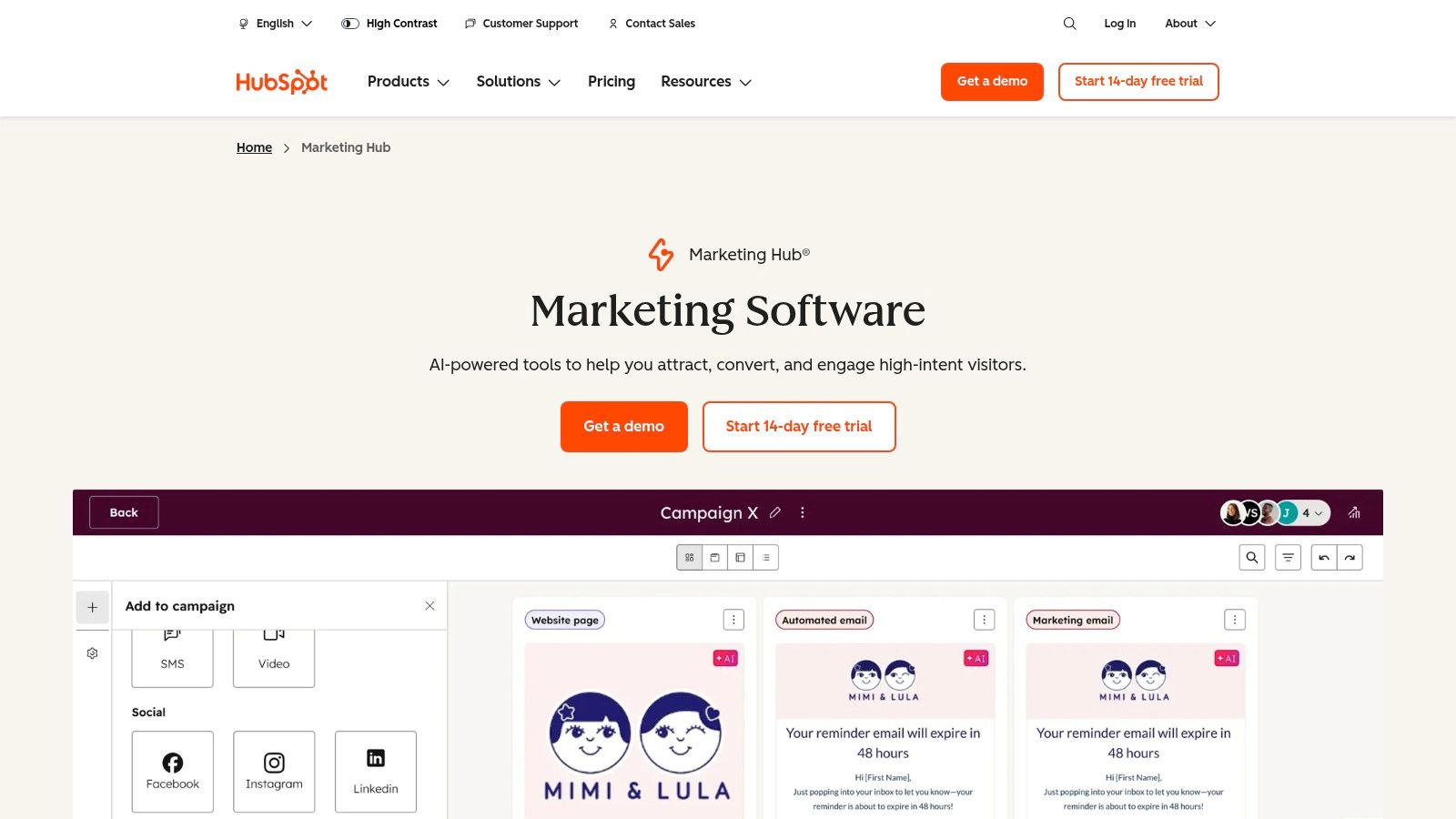
HubSpot's AI isn't just for writing copy; it predicts the best send times for emails, helps build campaigns, and generates reports. Its AI Content Assistant can draft blog posts or social updates directly within the platform, pulling context from your CRM to make the content more relevant and personalized.
Key Info & Use Cases
- Best For: Businesses of all sizes looking for an all-in-one marketing, sales, and service platform with integrated AI.
- Top Use Case: Creating a personalized lead nurturing journey where AI assists in writing the emails, optimizing send times, and then provides predictive analytics on which leads are most likely to close.
- Pricing: Free tools are available. Paid plans start at $15/month (billed annually), but powerful AI features are in the Professional tier ($800/month, billed annually). Mandatory onboarding fees apply to higher tiers.
Pros & Cons:
| Pros | Cons |
|---|---|
| End-to-end stack reduces need for dozens of integrations | Mandatory onboarding fees on Pro/Enterprise tiers are significant |
| Scales from free tools to full enterprise use cases | Costs rise quickly with contact counts and paid seats |
| Strong education, partner ecosystem, and community support | AI features are less of a standalone product and more of a booster |
Website: https://www.hubspot.com/products/marketing
5. Mailchimp (Intuit Mailchimp + Intuit Assist)
Mailchimp has evolved from a simple email tool into a comprehensive marketing platform, and with the integration of Intuit Assist, it's now a surprisingly powerful ai tool for marketing. Instead of just helping you send emails, its AI features focus on making those emails better. The platform analyzes millions of data points to optimize your subject lines, suggest email copy, and even determine the perfect time to send your campaign for maximum engagement. This makes it an ideal starting point for SMBs looking to dip their toes into AI-powered marketing without a steep learning curve.
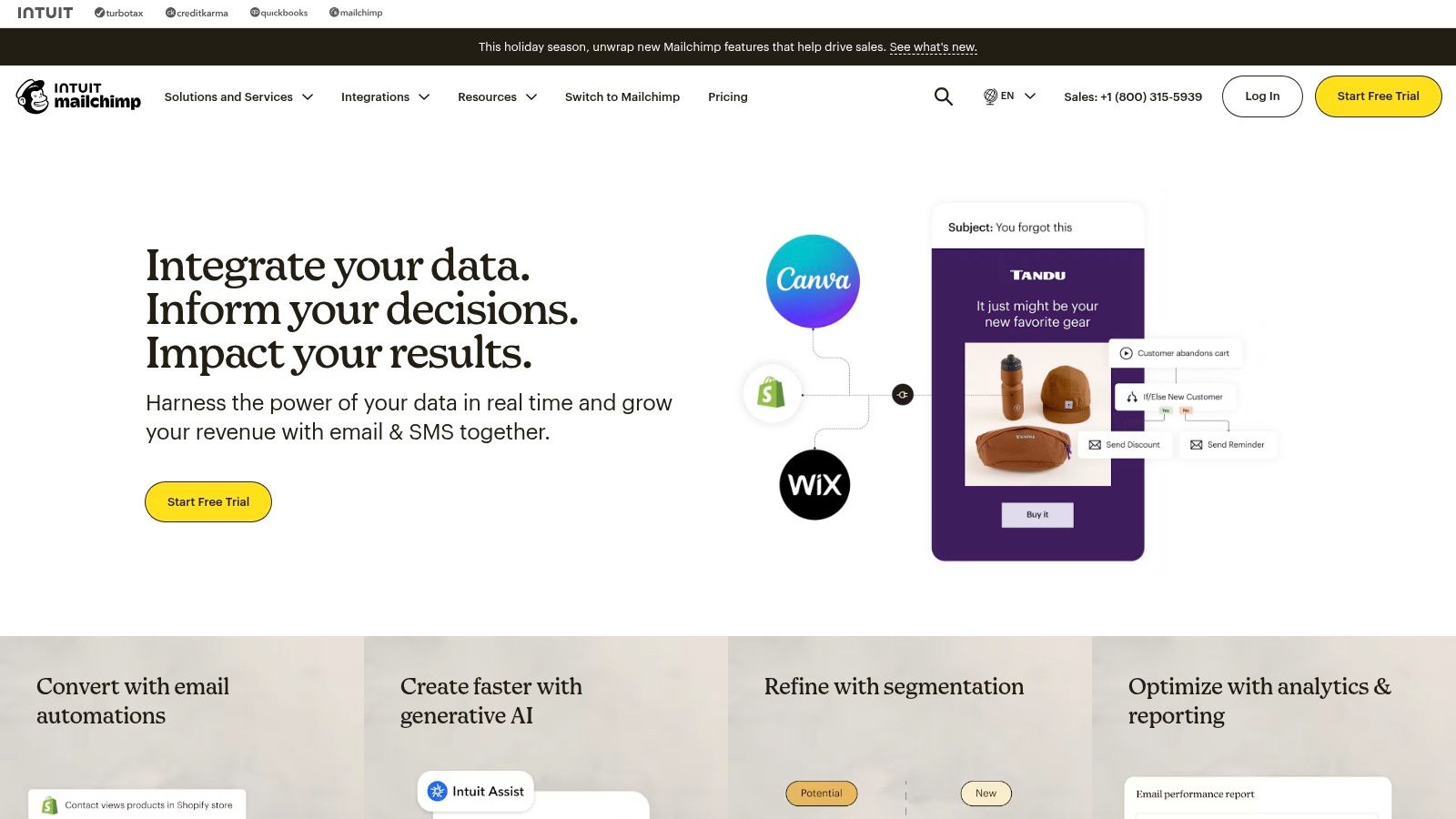
Its strength lies in making AI accessible within a familiar workflow. Features like the Content Optimizer provide concrete, data-backed suggestions to improve readability and click-through rates before you hit send. For those with writer's block, the 'Write with AI' feature generates copy for emails, subject lines, and headlines directly within the editor.
Key Info & Use Cases
- Best For: Small to medium-sized businesses that use Mailchimp as their central marketing hub.
- Top Use Case: Leveraging AI to optimize an entire email campaign, from generating subject lines and body copy with Intuit Assist to using send-time optimization to ensure it lands in inboxes at the most impactful moment.
- Pricing: A very limited free plan is available. Paid plans start at $13/month for the Essentials tier, with pricing scaling based on your contact list size.
Pros & Cons:
| Pros | Cons |
|---|---|
| Friendly for SMBs with a broad template and integration ecosystem | Free plan is very limited compared with paid tiers |
| Clear upgrade path from free to advanced tiers | Pricing scales with contact counts; monitor overages |
| Wide adoption makes integrations easy | Core AI features are less advanced than dedicated tools |
Website: https://mailchimp.com
6. Canva Magic Studio
Canva has long been the go-to for marketers who aren't graphic designers, and Magic Studio supercharges that accessibility with a full suite of AI tools. It transforms the platform from a template editor into a dynamic content creation engine. Instead of just finding a template, you can now generate entire designs, rewrite copy with Magic Write, or use Magic Edit to swap a product in an image with a simple text prompt. This makes it an indispensable ai tool for marketing on-the-fly content needs.
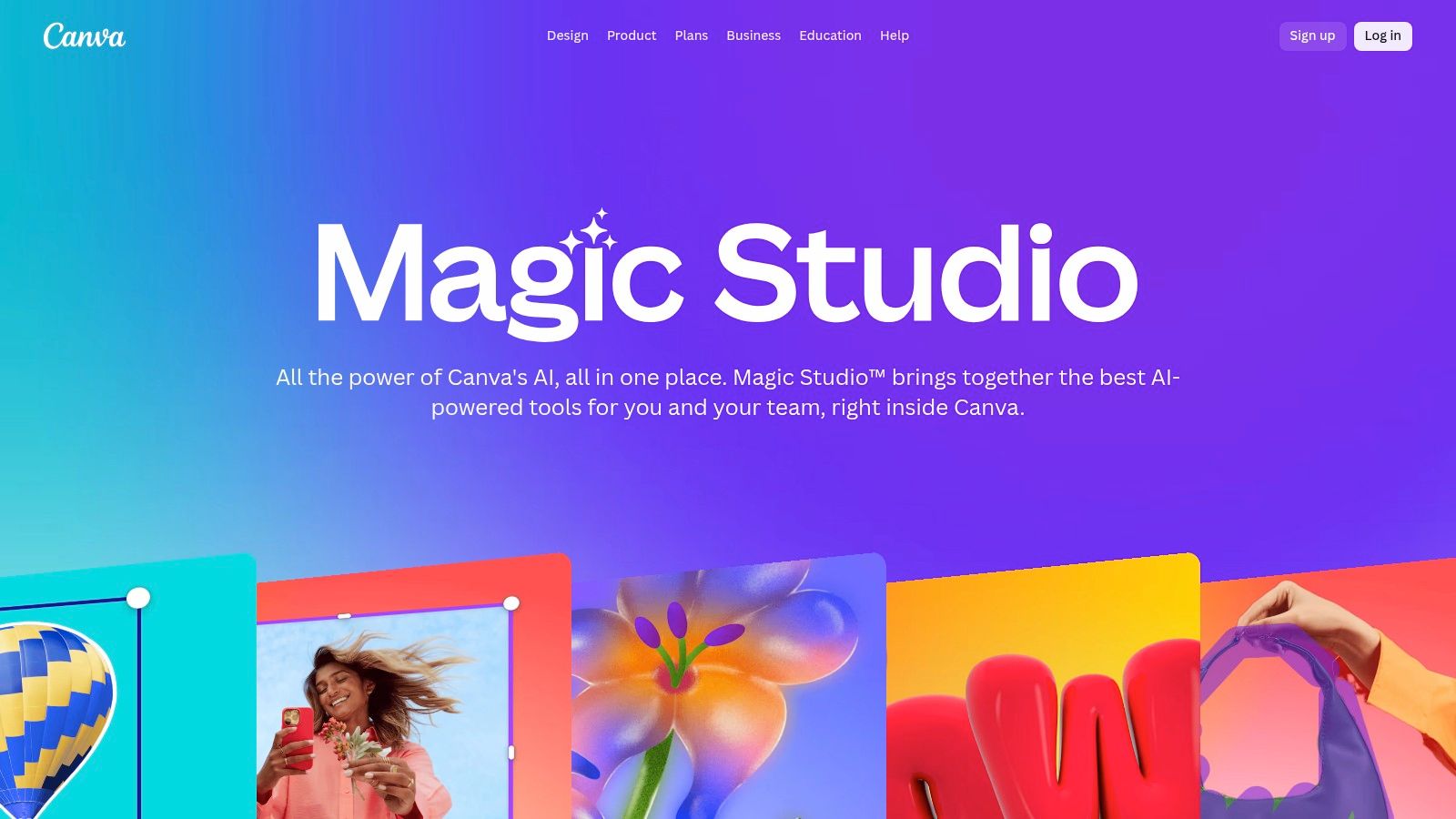
The platform integrates these AI features directly into the familiar Canva workflow, making them immediately usable without a steep learning curve. Its strength lies in speed, allowing a social media manager to create a week's worth of varied, on-brand visuals in a fraction of the time it would take with traditional tools.
Key Info & Use Cases
- Best For: Social media managers and marketing teams needing to produce a high volume of quality visual content quickly.
- Top Use Case: Instantly generating a set of ad creatives for A/B testing, using Magic Design to create multiple variations of a core concept with different layouts, images, and headlines.
- Pricing: Core Magic Studio features are included in Canva Pro ($14.99/month per person) and Canva for Teams ($29.99/month for the first 5 people). A free plan offers limited AI credits.
Pros & Cons:
| Pros | Cons |
|---|---|
| Fast asset creation for campaigns and social media | Advanced creative control is still below professional tools like Photoshop |
| Excellent team workflows and brand controls | Teams pricing has reportedly increased for some users |
| Cross-platform availability (web, desktop, mobile) | AI outputs can sometimes be generic and require manual tweaking |
Website: https://www.canva.com/magic
7. Hootsuite (OwlyWriter AI)
Hootsuite is the seasoned veteran of social media management, and it’s learned a few new AI tricks. Instead of being just a standalone content generator, its OwlyWriter AI is baked directly into the scheduling workflow you already know. This isn't about replacing your social media manager; it's about giving them superpowers to overcome writer's block and speed up content creation. This integration makes it a practical ai tool for marketing professionals who live inside their content calendars.
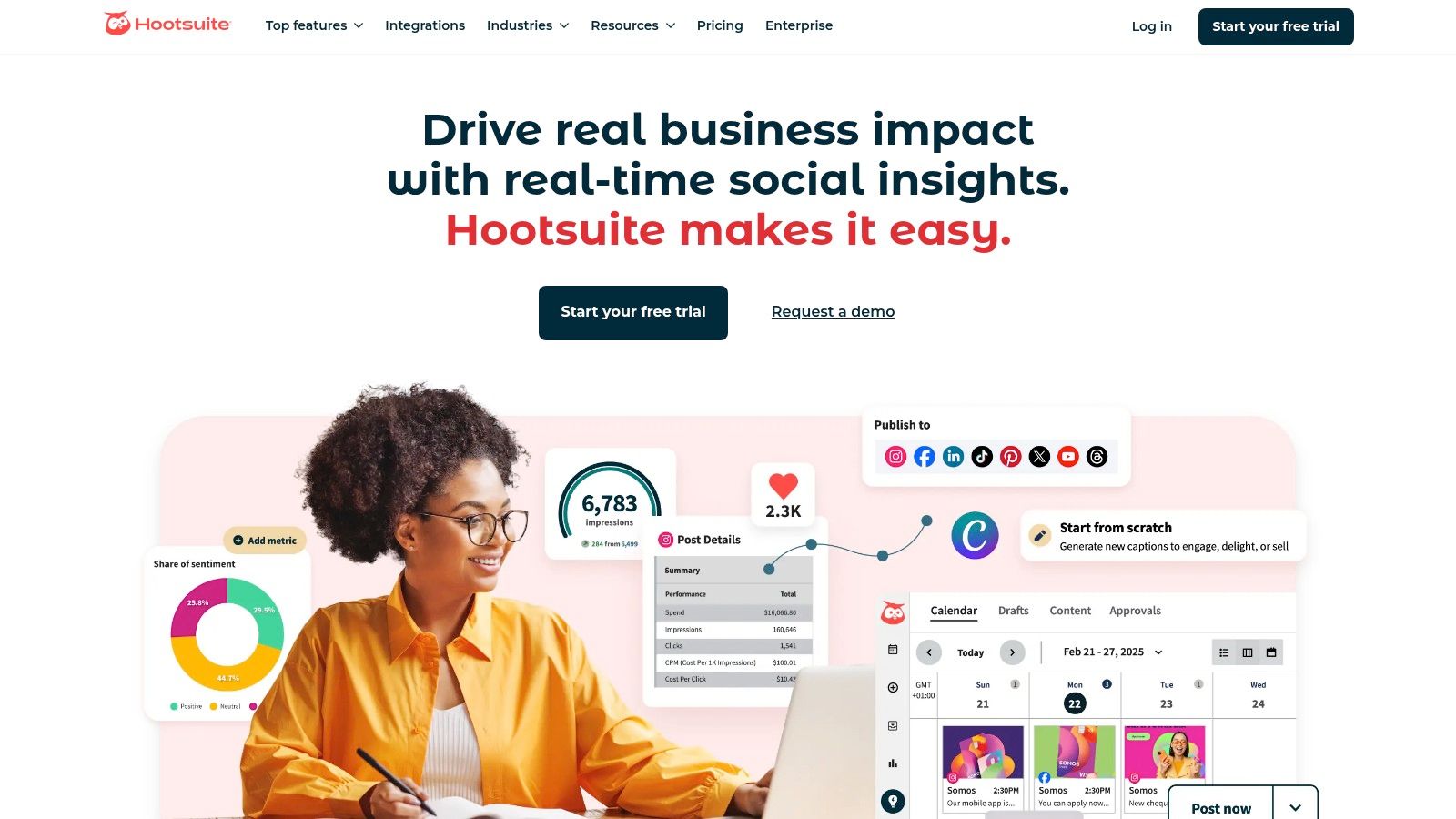
The platform’s strength lies in combining AI-assisted post creation with its enterprise-grade scheduling, analytics, and team collaboration features. OwlyWriter can generate post ideas from a link, create celebratory captions for holidays, or rewrite your existing copy into a different tone, all without leaving the post composer.
Key Info & Use Cases
- Best For: Social media managers, agencies, and marketing teams managing multiple social profiles.
- Top Use Case: Instantly generating multiple caption variations for a single piece of content, then scheduling them across different social networks directly within the Hootsuite dashboard.
- Pricing: Starts at $99/month for the Professional plan, which includes OwlyWriter AI. Higher tiers offer more users and advanced features. A 30-day free trial is available.
Pros & Cons:
| Pros | Cons |
|---|---|
| AI features are integrated directly into a robust SMM workflow | Higher starting price compared to single-purpose AI writers |
| Well-established platform with strong analytics and reporting | AI usage may be metered or have limits on lower-tier plans |
| Excellent for managing team permissions and approval processes | The AI is focused on social copy, not long-form content |
Website: https://www.hootsuite.com
8. Salesforce Marketing Cloud (Einstein)
Salesforce Marketing Cloud isn't just a platform; it's an enterprise-grade ecosystem where AI (dubbed "Einstein") is the central nervous system. This isn't for dabbling; it's for companies ready to leverage deep CRM data to orchestrate complex, personalized customer journeys at a massive scale. Its power lies in using your existing customer data to predict behavior, recommend products, and decide the next best action for every single contact, automatically.
This is a premier ai tool for marketing because it connects every touchpoint, from email to mobile to advertising, with a unified layer of intelligence. Einstein can optimize send times, suggest engaging subject lines, and segment audiences based on their likelihood to engage, all while learning from every interaction.
Key Info & Use Cases
- Best For: Large enterprises already invested in the Salesforce ecosystem.
- Top Use Case: Creating hyper-personalized, multi-channel customer journeys that automatically adapt based on real-time customer behavior and predictive analytics from Salesforce CRM data.
- Pricing: Pricing is quote-based and requires annual contracts, starting around $400/month for the base platform. Powerful AI features are often bundled in higher-tier plans or as add-ons.
Pros & Cons:
| Pros | Cons |
|---|---|
| Unmatched integration with Salesforce CRM for data-driven insights | Very high total cost of ownership and requires annual contracts |
| Highly scalable for orchestrating complex, global campaigns | Demands significant implementation expertise and resources |
| Rich add-on catalog for personalization and loyalty management | Can be overly complex for small or mid-sized businesses |
Website: https://www.salesforce.com/products/marketing-cloud/overview/
9. Adobe Marketo Engage
Adobe Marketo Engage is the heavyweight champion of B2B marketing automation, a powerhouse built to manage complex customer journeys from the first touch to the final sale. It’s less about a quick AI trick and more about weaving intelligence into the entire lead lifecycle. Its AI capabilities focus on predicting the best content and timing for engagement, ensuring your high-value leads get the white-glove treatment automatically. This makes it an essential ai tool for marketing for enterprises serious about account-based marketing (ABM).
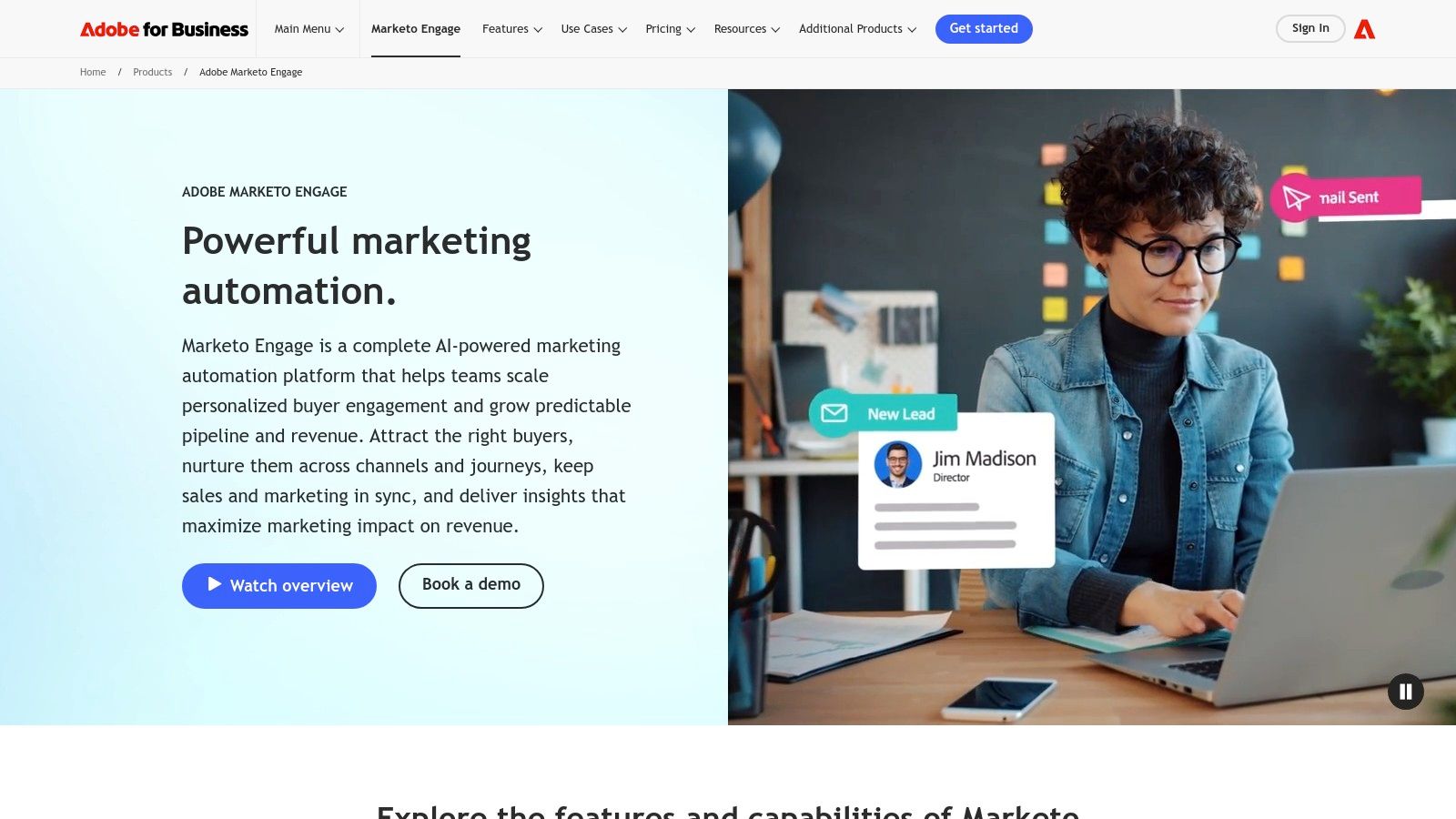
The platform’s strength lies in its profound lead and account scoring, which uses AI to analyze behavior and identify sales-ready opportunities far more accurately than manual rule-setting ever could. With its deep CRM integrations, it bridges the gap between marketing efforts and sales outcomes, providing a unified view of the entire revenue pipeline.
Key Info & Use Cases
- Best For: Enterprise B2B marketing teams with complex sales cycles and a focus on ABM.
- Top Use Case: Orchestrating a sophisticated, multi-channel nurturing sequence for a target account list, using AI to dynamically personalize content and alert sales reps at the optimal moment.
- Pricing: Entirely quote-based and tailored to specific needs. Expect enterprise-level pricing that reflects its powerful, and sometimes complex, feature set.
Pros & Cons:
| Pros | Cons |
|---|---|
| Deep B2B automation and account-based marketing capabilities | Pricing is quote-based and can be significantly high |
| Flexible data and highly customizable segmentation models | Has a notoriously steep learning curve compared to SMB tools |
| Large partner ecosystem and robust API for integrations | Can feel like overkill for businesses with simple sales funnels |
Website: https://business.adobe.com/products/marketo
10. Semrush
Semrush is the marketing world's Swiss Army knife, a long-standing titan now supercharged with AI to tackle nearly every aspect of digital strategy. It’s less of a single tool and more of a complete battlefield command center for SEO, content, and competitive analysis. While known for its legendary keyword and backlink data, its AI-powered features, like the AI Writing Assistant and topic research tools, have transformed it into a formidable ai tool for marketing that connects research directly to creation.
The platform shines by using AI not just for writing, but for uncovering strategic opportunities. You can identify what competitors are ranking for, get AI suggestions to optimize your content for those same terms, and track your performance, all within one integrated ecosystem. This closes the loop between data-driven insights and content execution.
Key Info & Use Cases
- Best For: Performance marketers and SEO specialists needing a data-backed, all-in-one platform.
- Top Use Case: Conducting deep keyword research to find high-opportunity topics, then immediately using the AI Writing Assistant to draft an SEO-optimized article based on top-ranking competitors.
- Pricing: Starts at $108.33/month (billed annually) for the Pro plan. More advanced features, API access, and higher limits are available in the Guru and Business plans.
Pros & Cons:
| Pros | Cons |
|---|---|
| All-in-one growth marketing toolkit for SEO, content, and ads | Can be overwhelming for beginners due to the sheer number of tools |
| Extremely powerful competitive and SERP analysis features | Seat and project limits can push you into expensive upgrades |
| Scales effectively from freelancers to large enterprises | Add-ons and extra users can significantly increase total cost |
Website: https://www.semrush.com
11. Google Ads
While you might not think of it as a standalone tool, Google Ads is arguably one of the most powerful and widely used AI engines in the marketing world. Its strength lies in its baked-in automation, using machine learning to optimize bids, targeting, and creative in real-time. This isn't just a basic ai tool for marketing; it’s a sophisticated system that analyzes millions of auction signals to get your ads in front of the right person at the right moment for the right price.
The platform has moved far beyond manual keyword bidding. Features like Smart Bidding (tCPA/tROAS) and Performance Max campaigns essentially let you hand the keys to Google’s AI, which then works to maximize your conversions or conversion value based on your specific business goals. To effectively leverage the power of search advertising within your AI marketing strategy, consider this comprehensive guide to Google Ads.
Key Info & Use Cases
- Best For: Any business serious about performance marketing, from local shops to global enterprises.
- Top Use Case: Running automated, conversion-focused ad campaigns using Smart Bidding to maximize return on ad spend (ROAS) without constant manual adjustments.
- Pricing: The AI features are free to use; you only pay for the ad spend you commit to. Costs are auction-based and highly variable.
Pros & Cons:
| Pros | Cons |
|---|---|
| Native to the largest search ad inventory | Performance depends heavily on conversion tracking quality |
| Proven optimization at immense scale | Learning periods and data needs can frustrate new users |
| No extra tool cost beyond your ad spend | Can feel like a "black box" with less direct control |
Website: https://ads.google.com
12. OpenAI ChatGPT
If you haven't heard of ChatGPT, you might have been marketing from under a very large, very offline rock. It's the AI equivalent of a Swiss Army knife: a general-purpose conversational assistant that marketers have adopted for everything from brainstorming ad angles to drafting complex content briefs. Its power lies in its sheer flexibility. It's not a niche ai tool for marketing, but a foundational platform you can mold to almost any task with the right prompting.
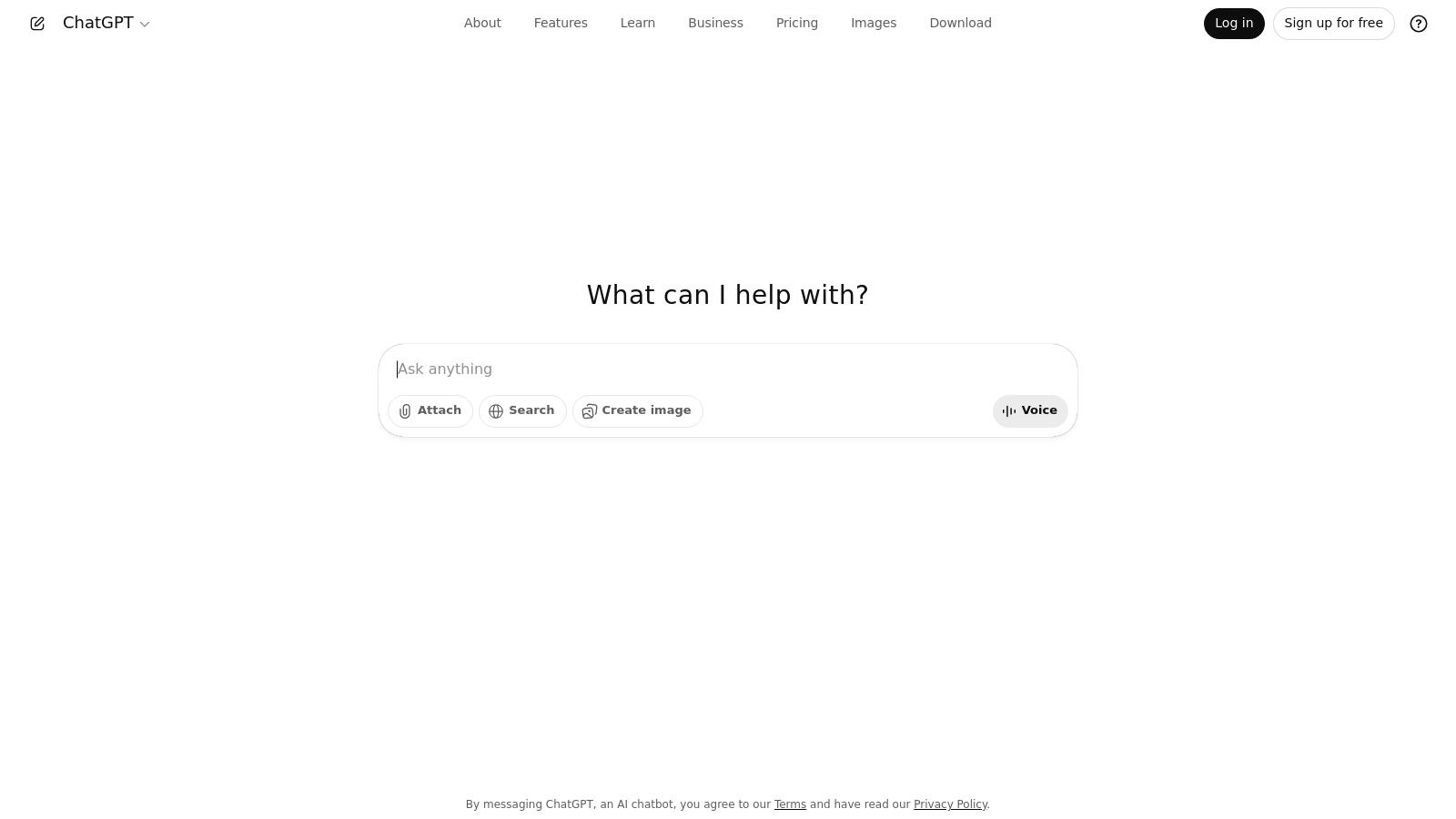
Unlike specialized tools, ChatGPT excels at unstructured, exploratory tasks. You can upload a spreadsheet of analytics data and ask for a summary of trends, or feed it a competitor's blog post and ask it to identify their content strategy. For teams, the Business plan provides a secure workspace to collaborate without training the public model on your data.
Key Info & Use Cases
- Best For: Marketers who need a versatile, all-purpose assistant for research, ideation, and first-draft generation.
- Top Use Case: Quickly generating dozens of variants for ad copy, email subject lines, or social media posts, then analyzing performance data to suggest improvements.
- Pricing: A powerful free tier is available. ChatGPT Plus starts at $20/user/month for priority access and advanced features. Team plans are $25/user/month (billed annually).
Pros & Cons:
| Pros | Cons |
|---|---|
| Extremely flexible across countless marketing tasks | General-purpose; brand governance relies on your prompts and processes |
| Low barrier to entry with a robust free tier available | Usage limits and privacy controls can vary significantly by plan |
| Team plans enable shared assets, custom instructions, and privacy | Lacks the structured, campaign-focused workflows of specialized platforms |
Website: https://chat.openai.com
Top 12 AI Marketing Tools — Side-by-Side Comparison
| Product | Core features | Quality ★ | Pricing 💰 | Target 👥 | Unique ✨ |
|---|---|---|---|---|---|
| 🏆 PixelPanda | BG removal, smart inpainting, 4x upscaling, face & hair enhancement, text‑to‑image, UGC video | ★★★★★ | 💰 Starter $39/mo (7k) → Pro $89/mo (35k); free trial | 👥 Developers, e‑commerce & marketing teams, agencies | ✨ Trainable avatars, lip‑synced talking‑heads (35+ langs), credit rollover, API/SDK |
| Jasper | Brand Voices, Canvas campaigns, Marketing Agents, API (Business) | ★★★★☆ | 💰 Seat/plan-based; Business (custom) / 7‑day trial | 👥 Marketing teams, enterprises | ✨ Brand governance + multi-step campaign builder |
| Copy.ai | Chat workspace, workflow builder, Content Agent Studio, multi-models | ★★★★☆ | 💰 Competitive entry pricing; credit-based workflows | 👥 Small marketing teams, content ops | ✨ Multi-model access & agent-driven content ops |
| HubSpot Marketing Hub | Omnichannel automation, integrated CRM, reporting, AI assistance | ★★★★★ | 💰 Free→Pro/Enterprise; onboarding fees on higher tiers | 👥 SMB→Enterprise marketers needing CRM integration | ✨ End-to-end stack + strong partner ecosystem |
| Mailchimp | Email & SMS, AI copy, send-time optimization, prebuilt automations | ★★★★☆ | 💰 Freemium → contact-based pricing (scales with contacts) | 👥 SMBs and small marketing teams | ✨ Large template library & Intuit Assist integration |
| Canva Magic Studio | Magic Write/Design, Magic Edit, text→image/video, brand kits | ★★★★☆ | 💰 Freemium; Teams/Pro paid tiers | 👥 Creators, social & marketing teams | ✨ Rapid on‑brand asset creation and team collaboration |
| Hootsuite (OwlyWriter AI) | AI captioning, scheduling, analytics, multi-network publishing | ★★★★☆ | 💰 Paid plans; higher than some SMB tools | 👥 Agencies & social media teams | ✨ Mature social management + built‑in AI |
| Salesforce Marketing Cloud | Agent-assisted campaigns, cross-channel journeys, personalization | ★★★★★ | 💰 Enterprise pricing; annual contracts | 👥 Large enterprises (Salesforce customers) | ✨ Deep CRM integration & scalable personalization |
| Adobe Marketo Engage | Personalization, ABM, lead/account scoring, journey analytics | ★★★★★ | 💰 Quote-based enterprise pricing | 👥 B2B/B2C enterprise marketing teams | ✨ Robust ABM and journey analytics |
| Semrush | Keyword research, site audits, AI Writing Assistant, competitive intel | ★★★★☆ | 💰 Tiered plans; add-ons can raise costs | 👥 SEO/SEM & performance marketers | ✨ All‑in‑one SEO + competitive insights |
| Google Ads | Smart Bidding, auction-time optimization, value-based bidding | ★★★★★ | 💰 Pay‑per‑click (ad spend); no platform fee | 👥 Advertisers seeking search traffic & ROAS | ✨ Largest search inventory & proven optimization |
| OpenAI ChatGPT | GPT models, chat, files, plugins, API access | ★★★★☆ | 💰 Free tier; Team/Business plans for scale | 👥 Marketers and teams for ideation, briefs & analysis | ✨ Extremely flexible assistant + plugin ecosystem |
So, What's the Right AI Tool for Your Marketing?
And there you have it, a whirlwind tour of the AI-powered marketing landscape. We’ve journeyed from powerhouse content generators like Jasper to all-in-one automation behemoths like HubSpot, and even seen how specialized visual workhorses like PixelPanda are changing the game for e-commerce and social media teams. It's a lot to take in, and if your head is spinning with API keys and feature comparisons, that's completely normal.
The most important takeaway isn't to adopt every single ai tool for marketing on this list. That would be like trying to cook a gourmet meal using every appliance in the kitchen at once- a recipe for chaos and a very messy cleanup. Instead, the goal is to pinpoint the single biggest friction point in your current workflow and find the one tool that solves it brilliantly.
Finding Your Perfect AI Co-Pilot
Think of this process as hiring a specialist. You wouldn't hire a plumber to fix your website, and you shouldn't expect a text generator to master your product photography. Your selection criteria should be hyper-focused on your most pressing needs.
-
Struggling with content velocity? If your blog feels like a barren desert and your social media captions are gathering dust, a writer’s assistant like Jasper or Copy.ai is your logical first step. They're designed to break through writer's block and scale content production without sacrificing your brand's unique voice.
-
Drowning in visual asset creation? For e-commerce brands, marketplaces, or any team pumping out visual ads, the bottleneck is often image editing. Manually removing backgrounds or creating variations is a soul-crushing time sink. This is where a dedicated visual AI tool like PixelPanda becomes your hero, automating the grunt work and freeing your designers for high-impact creative strategy.
-
Need an end-to-end command center? If your marketing efforts are fragmented across a dozen different apps, and you crave a single source of truth, then it's time to look at an integrated platform. HubSpot Marketing Hub or Salesforce Marketing Cloud can connect your customer data, email campaigns, and analytics under one intelligent, AI-enhanced roof.
Your Action Plan: Start Small, Win Big
The path to AI-driven marketing success is paved with small, deliberate experiments, not giant, risky leaps. Don't try to revolutionize your entire department overnight. Instead, pick your bottleneck, choose your tool, and launch a pilot project.
Assign a small team to a 30-day trial. Set a clear, measurable goal. For example, "Can Jasper help us double our blog output?" or "Can PixelPanda reduce our image editing time by 75%?" Track your results, gather feedback, and then decide if it’s the right ai tool for marketing to integrate more broadly. This approach minimizes risk and helps you build momentum with tangible wins. The AI revolution isn’t about replacing human creativity; it's about augmenting it, freeing you from the mundane to focus on the magnificent. Now go find your co-pilot.
Ready to eliminate your biggest visual marketing bottleneck? Stop wasting hours on tedious background removal and inconsistent product shots. See how PixelPanda can automate your image workflows with our powerful API and start producing stunning, on-brand visuals in seconds. Get started with PixelPanda today.